Yamunotri Travel Guide: Following the First Breath of the Yamuna
Plan your Yamunotri Yatra with this complete guide covering the Janki Chatti trek, road route, best time, Surya Kund, nearby places and travel tips.
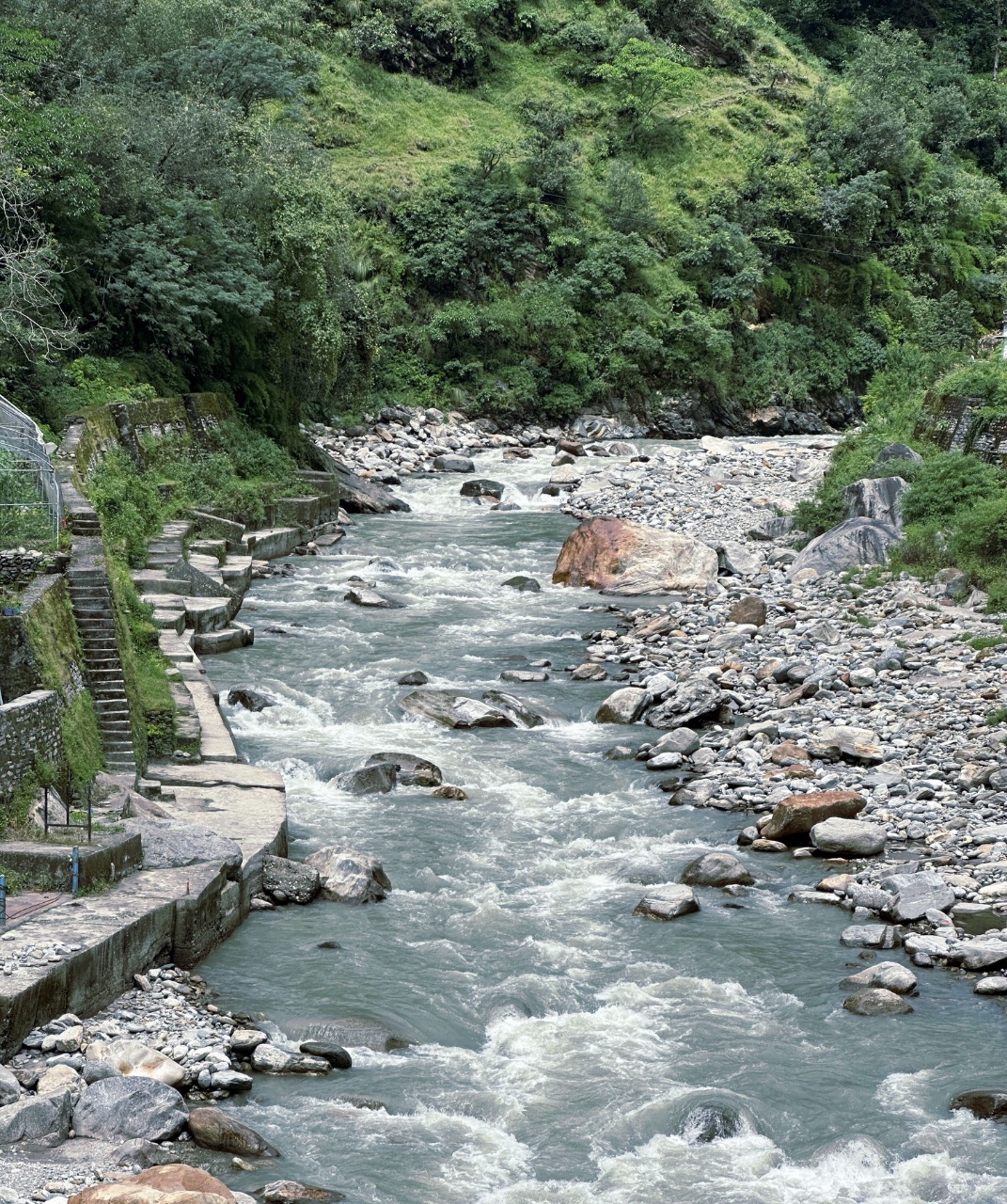
Before the Yamuna becomes a river of cities, stories and crowded ghats, she begins quietly in the high Himalayas.
The road to Yamunotri moves through cedar-covered slopes, small mountain settlements and valleys where clouds seem close enough to touch. Beyond Barkot, the journey follows the river deeper into the mountains until the road ends at Janki Chatti.
From there, every traveller must continue more slowly.
The path climbs beside the river through forests, waterfalls and steep stone bends. Horses pass with bells around their necks, pilgrims call out the name of the goddess, and the sound of the Yamuna remains close throughout the journey.
At the end of the trail stands Yamunotri Temple—a colourful shrine surrounded by rock, water, steam and an extraordinary Himalayan stillness.
This Yamunotri travel guide covers the road route, the trek from Janki Chatti, the best time to visit, temple traditions, nearby places and the precautions required for a safe journey.
Place Overview
Yamunotri lies in the Uttarkashi district of Uttarakhand at approximately 3,293 metres above sea level. It is traditionally regarded as the first destination in Uttarakhand’s Char Dham Yatra, followed by Gangotri, Kedarnath and Badrinath.
The temple is dedicated to Goddess Yamuna and marks the sacred origin of the Yamuna River. The actual geographical source lies higher in the mountains around the Champasar Glacier near Kalind Parvat, but the difficult terrain makes it inaccessible to regular pilgrims.
Yamunotri Temple therefore serves as the principal place of worship.
The shrine is reached through an approximately six-kilometre uphill trail from Janki Chatti, the last motorable point. Natural hot springs, the sacred Divya Shila and the young Yamuna flowing through the narrow valley form an inseparable part of the experience.
According to the Uttarkashi district administration, Yamunotri is the westernmost of Uttarakhand’s Char Dham shrines and lies beneath the Bandarpoonch mountain region.
Why This Place Is Special
Yamunotri holds the intimacy of a place that cannot be reached in a hurry.
The temple is smaller than the mountains surrounding it. Steam rises from the hot springs, the river moves over dark rocks, and pilgrims gather with offerings carried carefully along the trail.
According to Hindu tradition, Goddess Yamuna is the daughter of Surya, the Sun God, and the sister of Yama, the God of Death. Devotion to the goddess is associated with protection, compassion and freedom from the fear of death.
The region is also connected with the story of Sage Asit Muni, who is believed to have lived here and bathed daily in both the Yamuna and the Ganga. When old age prevented him from travelling to Gangotri, a stream of the Ganga is said to have appeared near Yamunotri.
But Yamunotri’s meaning is not limited to mythology. It is also found in the sight of the river at its youngest, long before it enters the plains and becomes part of millions of lives.
To stand here is to meet a familiar river in an unfamiliar form—wild, cold and still close to the mountain that gave it birth.
How To Reach
By Train:
Dehradun, Haridwar and Rishikesh are the practical railway stations for Yamunotri.
Dehradun is identified by the Uttarkashi district administration as the nearest railhead, while Haridwar generally provides wider railway connectivity.
The remaining journey must be completed by road.
By Air:
Jolly Grant Airport near Dehradun is the closest airport. Travellers must continue by road through Dehradun, Barkot and Hanuman Chatti before reaching Janki Chatti.
Keep a full day for the road journey and avoid planning the trek immediately after arriving by flight.
Best Time To Visit
May to June
This is the main Yamunotri pilgrimage season. The weather is comparatively comfortable, waterfalls are active and the surrounding slopes begin turning green.
It is also the busiest period. Accommodation in Barkot and Janki Chatti should be booked early.
July to mid-September
The monsoon brings mist, rain and rich greenery, but it also creates slippery trails, landslide risks, falling stones and possible road closures.
Travellers should avoid proceeding during heavy-rain warnings and confirm the condition of the Barkot–Janki Chatti road before departure.
Late September to October
Autumn often brings clearer mountain views and fewer visitors. The air becomes colder, particularly during the morning and after sunset.
Warm clothing is essential, and travellers should keep enough time for unexpected weather changes.
November to April
The temple closes for winter because of heavy snowfall and severe mountain conditions. The ceremonial deity is taken to Kharsali, the winter seat of Goddess Yamuna.
The shrine traditionally opens on Akshaya Tritiya and closes around Bhai Dooj, but exact dates should be verified every year.
Pahad Calling recommendation: Visit during late May or June for the full pilgrimage atmosphere, or choose late September to October for quieter trails and clearer views.
Things To Do
- Visit Yamunotri Temple
- The temple is dedicated to Goddess Yamuna and contains a dark stone representation of the deity.
- Allow enough time for darshan without rushing immediately back towards Janki Chatti. The temple’s setting—the river, steep valley and surrounding mountain walls—is as meaningful as the shrine itself.
- Experience Surya Kund
- Surya Kund is the most prominent hot-water spring near Yamunotri Temple. Pilgrims traditionally place rice or potatoes wrapped in cloth into the hot water, which is later received as prasad.
- The water can be extremely hot. Do not place your hands into the spring or attempt the ritual without guidance from temple staff or priests.
- Offer prayers at Divya Shila
- Divya Shila is a sacred stone situated near Surya Kund. Pilgrims traditionally offer prayers here before entering Yamunotri Temple.
- Even during crowded periods, pause long enough to understand the sequence and meaning of the local tradition.
- Spend time beside the Yamuna
- Near Yamunotri, the river is young, fast and strikingly clear. Watch it move through the rocks, but remain inside designated safe areas.
- Avoid standing on wet stones or approaching sections with a strong current.
- Explore Janki Chatti
- Janki Chatti is more than the starting point of the trek. The settlement is surrounded by forested slopes and is known for its natural hot-water springs.
- Spend the night here if you want to begin the trek early without travelling from Barkot in the morning.
- Visit Kharsali
- Kharsali is the winter home of Goddess Yamuna and is known for its traditional wooden and stone architecture.
- The ancient Shani Temple is an important local shrine and offers a quieter glimpse of the region’s spiritual traditions.
- Stop at Hanuman Chatti
- Hanuman Chatti was once the main starting point for the longer Yamunotri trek. Today, it is a peaceful stop between Barkot and Janki Chatti.
- The meeting of mountain streams, old pilgrimage paths and forested surroundings makes it worth a brief visit.
Food / Local Culture
Food around Yamunotri is simple, vegetarian and designed for travellers completing a demanding journey.
Restaurants and seasonal stalls generally serve dal, rice, roti, vegetables, khichdi, paratha, noodles, tea and basic snacks. Barkot offers more variety than Janki Chatti or the trekking route.
Where available, try Garhwali dishes such as mandua roti, aloo ke gutke or jhangora preparations. Local food is more likely to be found in homestays and family-run kitchens than in crowded pilgrimage restaurants.
Yamunotri is a sacred environment rather than an entertainment destination. Keep noise low, dress respectfully and ask permission before photographing residents, priests or private religious ceremonies.
Travel Tips
Complete the required Char Dham Yatra registration before travelling.
Stay overnight at Barkot or Janki Chatti before the trek.
Begin walking as early as local authorities permit.
Keep sufficient time for both the ascent and descent.
Carry government-issued identification and offline registration copies.
Wear comfortable trekking shoes with reliable grip.
Use a trekking pole on steep or wet sections.
Carry a waterproof jacket, warm layers and a woollen cap.
Pack water, dry fruits and lightweight energy snacks.
Carry sunscreen because ultraviolet exposure is stronger at altitude.
Keep some cash because network connectivity may be unreliable.
Book ponies and palkis only from authorised counters.
Confirm current charges before accepting any service.
Check weather and road conditions before leaving Barkot.
Carry every wrapper and plastic item back from the trail.
Keep one buffer day during the monsoon or late autumn.
Things To Avoid
Do not underestimate the trail because it is shorter than the Kedarnath trek.
Avoid starting the climb late in the day.
Do not continue during heavy rain or an official route-closure warning.
Never place your hands directly into Surya Kund.
Avoid walking too close to the edge when ponies are passing.
Do not stand beneath unstable slopes or falling-stone zones.
Avoid using unregistered pony, porter or palki services.
Do not walk on wet river rocks for photographs.
Avoid carrying excessive luggage during the climb.
Do not attempt to reach the actual Yamuna glacier without specialist guidance and official confirmation.
Never leave plastic, food packaging or religious offerings on the trail.
Do not ignore dizziness, nausea, headache or unusual breathlessness.
Elderly travellers and people with heart, breathing, knee or mobility concerns should consult a qualified medical professional before undertaking the trek.
Suggested Itinerary
- Day 1 – Dehradun or Rishikesh to Barkot
- Leave early and travel through the lower Himalayan valleys towards Barkot.
- Check into your accommodation, complete any pending registration formalities and confirm the next morning’s road and weather conditions.
- If time permits, explore the local market or spend the evening resting beside the Yamuna valley.
- Day 2 – Barkot to Janki Chatti and Yamunotri
- Leave Barkot early and drive through Hanuman Chatti to Janki Chatti.
- Begin the six-kilometre trek to Yamunotri Temple. Visit Divya Shila, Surya Kund and the main shrine before starting the return journey.
- Descend carefully and stay overnight at Janki Chatti or Barkot.
- Day 3 – Kharsali and return journey
- Visit Kharsali and its traditional Shani Temple before beginning the return journey.
- Stop briefly at Hanuman Chatti if road and weather conditions allow. Continue towards Dehradun, Haridwar or Rishikesh.
- Travellers combining Yamunotri with Gangotri can continue towards Uttarkashi instead.
Final Thoughts
The Yamuna that leaves the Himalayas will travel through towns, fields and crowded cities. Millions will see her, depend on her and call her sacred.
But at Yamunotri, she is still a mountain river—young, cold and untamed.
The journey to meet her begins on a road but is completed on foot. It passes through rain, forest, steam and the sound of bells moving along a narrow trail. By the time the temple appears, the distance feels like more than six kilometres.
Perhaps that is Yamunotri’s quiet lesson: every river begins before the world knows its name, and every meaningful journey asks us to slow down enough to notice.
Walk gently. Respect the mountain. Bring back your memories—and every piece of waste you carried with you.
No approved comments yet. Be the first to share your thoughts.