Kedarnath Travel Guide: A Journey Through Silence, Stone and Faith
Plan your Kedarnath journey with this complete guide covering the trek, road route, best time, helicopter services, sacred places and travel precautions.
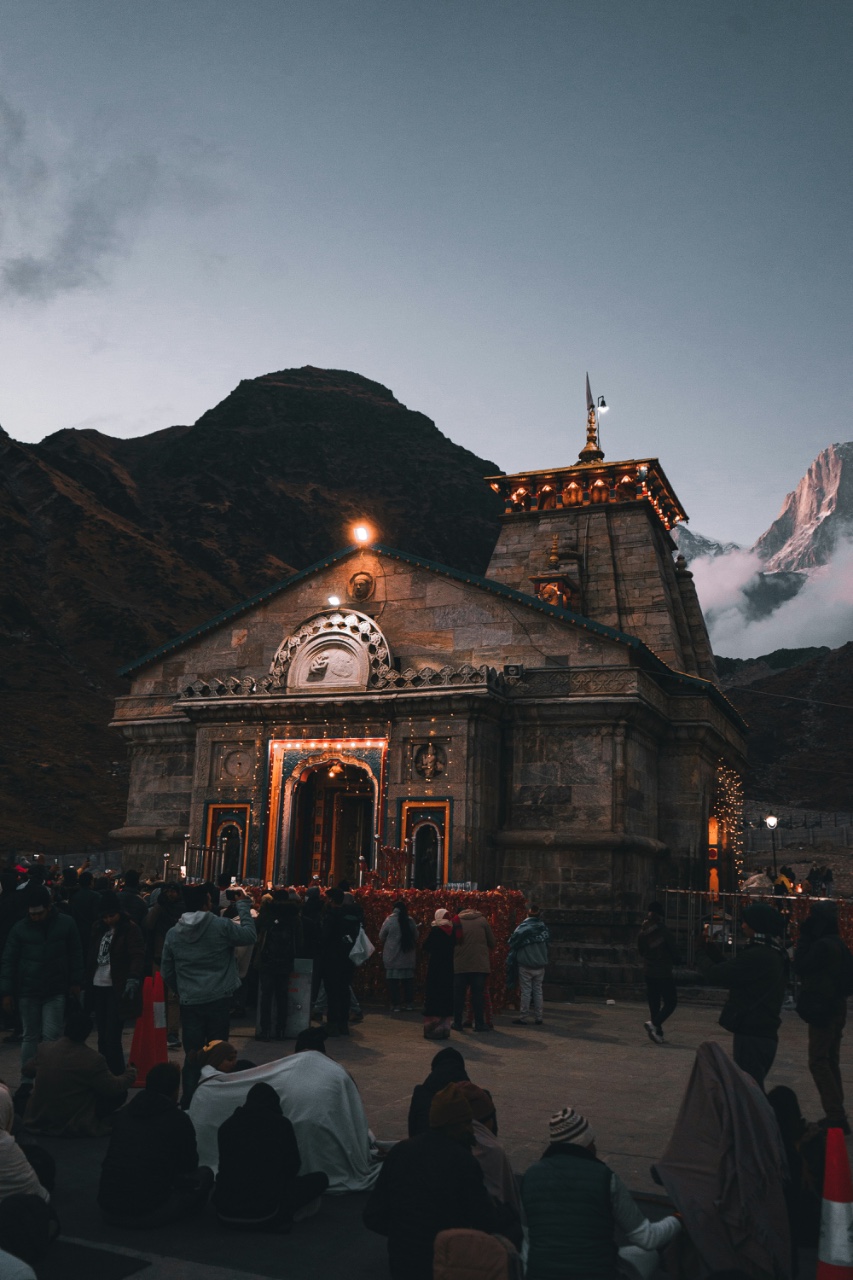
Kedarnath does not reveal itself at the end of an easy road.
The road stops at Gaurikund, and the mountains ask you to continue slowly—one step, one breath and one bend at a time. The Mandakini moves through the valley below, ponies pass with the sound of bells, and distant chants appear and disappear with the wind.
For hours, the destination remains hidden behind the mountains. Then the valley opens.
There, surrounded by snow-covered peaks and an immense Himalayan silence, stands Kedarnath Temple. Built from heavy grey stones and protected by centuries of prayer, the shrine feels less like something constructed in the mountains and more like something that has always belonged to them.
This Kedarnath travel guide covers the complete road route, the trek from Gaurikund, helicopter access, the best time to visit, important precautions and a practical three-day itinerary.
Place Overview
Kedarnath is situated in the Rudraprayag district of Uttarakhand, near the Mandakini River, at approximately 3,584 metres above sea level.
Dedicated to Lord Shiva, Kedarnath Temple is one of India’s twelve Jyotirlingas. It is also part of Uttarakhand’s Char Dham Yatra and the Panch Kedar pilgrimage tradition.
The temple stands on a broad Himalayan plateau surrounded by towering peaks. Constructed from massive stone slabs, it contains a naturally formed conical rock worshipped as Lord Shiva in the Sadashiva form.
Kedarnath cannot be reached directly by road. The motorable journey ends near Gaurikund, after which pilgrims must continue through an approximately 16-kilometre uphill route by foot, pony or palki. Helicopter services are also operated during suitable weather.
Because of severe winter snowfall, the shrine is generally accessible from April or May until October or November. The exact opening and closing dates are announced every year.
Why This Place Is Special
Kedarnath is not only about arriving at a temple. It is about everything the mountain asks you to leave behind along the way.
The trek slowly removes the noise of ordinary life. Conversations become shorter. Every turn becomes about breath, weather and the strength required for the next climb. Somewhere between Gaurikund and the final valley, the journey begins to feel deeply personal.
According to Hindu tradition, the Pandavas came to the Himalayas seeking Lord Shiva’s forgiveness after the Mahabharata war. Lord Shiva avoided them by taking the form of a bull and disappearing into the earth. His hump is believed to have appeared at Kedarnath, while other parts manifested at Tungnath, Rudranath, Madhyamaheshwar and Kalpeshwar—together forming the Panch Kedar.
Kedarnath is also remembered for surviving the devastating floods of 2013. A massive rock behind the temple, now respectfully known as Bheem Shila, is believed to have diverted the force of the debris and protected the main shrine.
Yet Kedarnath’s power cannot be explained through mythology or history alone. It is felt in the temple courtyard before sunrise, in the cold wind moving through the valley and in the silence that follows the evening bells.
How To Reach
By Train:
Rishikesh is officially listed as the nearest railway station. Haridwar is another practical option because it has wider railway connectivity with Delhi and other major Indian cities.
The remaining journey must be completed by road.
By Air:
Jolly Grant Airport near Dehradun is the closest airport. From the airport, travellers must continue by road through Rishikesh, Rudraprayag and Guptkashi.
Keep an additional day in the itinerary if arriving by flight because weather and mountain traffic can affect travel time.
Best Time To Visit
May to June
This is the main Kedarnath pilgrimage season. The weather is generally more suitable for trekking, although mornings and nights remain cold.
Fresh snow may still be visible around the surrounding peaks. This period also receives large crowds, so registration, accommodation and transport should be arranged early.
July to mid-September
The monsoon brings frequent rain, reduced visibility, slippery trails, falling stones and an increased possibility of landslides.
Temporary road and trek closures are possible. Travelling during this period should only be considered after checking official weather and district advisories.
Late September to October
This period often brings clearer mountain views and fewer pilgrims than the early summer season.
Temperatures drop sharply after sunset, and snowfall can begin unexpectedly. Carry proper winter clothing and allow extra time for weather disruptions.
November to April
Heavy snowfall covers Kedarnath during winter, and the temple remains closed. The ceremonial deity is taken to the Omkareshwar Temple in Ukhimath, where winter worship continues.
Pahad Calling recommendation: Choose late May to June for the full pilgrimage atmosphere or late September to early October for clearer views and comparatively quieter surroundings.
Things To Do
- Visit Kedarnath Temple
- Allow yourself enough time to experience the temple beyond the darshan queue. Observe the stone architecture, the Nandi statue outside the entrance and the mountains rising behind the shrine.
- The atmosphere around the temple is especially moving during the early morning and evening aarti.
- See Bheem Shila
- Behind the temple stands the enormous rock associated with the survival of the shrine during the 2013 disaster.
- It has become a place of remembrance and gratitude. Visit quietly and avoid treating it only as a photography point.
- Visit Adi Shankaracharya Samadhi
- The restored Adi Shankaracharya Samadhi is located behind Kedarnath Temple. It honours the philosopher and spiritual teacher traditionally associated with the revival of the shrine.
- Its position beneath the surrounding peaks makes it one of the most peaceful spaces in the temple area.
- Walk to Bhairavnath Temple
- Bhairavnath Temple is situated on a hill above Kedarnath. The short climb provides a wide view of the Kedarnath valley and the main temple complex.
- The trail is steep, so attempt it only if you are comfortable with the altitude and the weather is stable.
- Spend time beside the Mandakini
- The Mandakini is inseparable from the landscape and story of Kedarnath. Sit only in designated safe areas and remain well away from fast-flowing water, unstable banks and restricted sections.
- Experience sunrise in Kedarnath
- Wake before sunrise and step into the temple courtyard while the valley is still quiet. As the first light reaches the surrounding peaks, the stone temple slowly emerges from the blue Himalayan darkness.
- It is an experience that needs no narration.
Food / Local Culture
Food in Kedarnath is simple, warming and mostly vegetarian. Seasonal restaurants, stalls, dharamshalas and community kitchens generally serve dal, rice, roti, vegetables, khichdi, paratha, noodles, tea and basic snacks.
Prices may be higher than in lower towns because supplies must be transported along the mountain route.
Carry dry fruits, energy snacks and a reusable water bottle during the trek, but avoid carrying unnecessary weight. Bring every wrapper back with you.
Kedarnath is first a sacred pilgrimage site. Dress respectfully, keep noise low around the temple, follow queue instructions and ask permission before photographing pilgrims, priests or religious ceremonies.
Travel Tips
Complete the official Char Dham Yatra registration before travelling.
Check the daily weather forecast and route condition.
Stay at Guptkashi, Sitapur or Sonprayag before starting the trek.
Begin the trek from Gaurikund as early as permitted.
Keep one buffer day for rain, road closures or helicopter cancellations.
Carry government-issued identification and offline registration copies.
Wear broken-in trekking shoes with reliable grip.
Carry waterproof layers, gloves, a woollen cap and warm clothing.
Use a lightweight backpack and trekking pole.
Carry water, energy snacks, sunscreen and prescribed medication.
Drink regularly, but avoid forcing yourself to walk quickly.
Book ponies, palkis and helicopters only through authorised channels.
Reserve accommodation in Kedarnath before beginning the climb.
Keep some cash because mobile networks and online payments may fail.
Follow instructions issued by police, SDRF, medical teams and local authorities.
The Temple Committee warns that high-altitude travellers may face extreme cold, low humidity, strong ultraviolet exposure and reduced oxygen pressure.
Things To Avoid
Do not attempt the trek without considering your fitness and medical condition.
Do not ignore headache, dizziness, nausea, chest discomfort or unusual breathlessness.
Avoid starting the trek late in the day.
Never continue during an official weather or route-closure warning.
Do not stand under unstable slopes or stop in falling-stone zones.
Avoid walking too close to the edge while overtaking ponies.
Give animals enough space and follow the handler’s instructions.
Do not attempt isolated trails without confirming access locally.
Avoid buying helicopter tickets from unofficial agents.
Do not depend on the internet for essential documents.
Avoid loud music, littering and disruptive photography.
Do not plan a rushed same-day ascent and descent unless using authorised aerial transport and physically prepared.
Kedarnath is a demanding high-altitude journey. Elderly travellers and people with heart, breathing or mobility concerns should consult a qualified medical professional before travelling.
Suggested Itinerary
- Day 1 – Rishikesh to Guptkashi or Sonprayag
- Leave Rishikesh early and travel through Devprayag, Srinagar and Rudraprayag.
- Continue along the Mandakini valley towards Guptkashi, Sitapur or Sonprayag. Complete any remaining registration or transport arrangements and rest early.
- Do not plan the Kedarnath trek on the same day after completing this long road journey.
- Day 2 – Gaurikund to Kedarnath
- Travel from Sonprayag to Gaurikund according to the current local transport arrangement.
- Begin the approximately 16-kilometre climb early. Walk slowly, take short breaks and monitor the weather. Reach Kedarnath, check into your reserved accommodation and rest before visiting the temple.
- Attend the evening aarti if your health and arrival time allow.
- Day 3 – Kedarnath darshan and descent
- Wake early for temple darshan and sunrise. Visit Bheem Shila and Adi Shankaracharya Samadhi.
- Begin descending towards Gaurikund without waiting until late afternoon. Continue to Sonprayag and stay overnight at Sitapur or Guptkashi.
- Keep an additional buffer day whenever possible, particularly during the monsoon or late autumn.
Final Thoughts
Kedarnath is often described through numbers—kilometres walked, metres climbed and hours spent waiting. Yet none of these numbers explain what the journey leaves behind.
Perhaps it is the first sight of the temple after a long climb. Perhaps it is a stranger offering water when your steps begin to slow. Perhaps it is the evening bell travelling through a valley where even the mountains appear to be listening.
The journey can be exhausting. The weather can be uncertain, and the altitude teaches humility quickly. But when the clouds move away and the ancient stone temple stands beneath the white peaks, the difficulty no longer feels separate from the experience.
Travel prepared. Walk with patience. Leave no waste behind.
Kedarnath does not need to be conquered. It only needs to be approached with respect.
No approved comments yet. Be the first to share your thoughts.