Gangotri Travel Guide: Where the Ganga Begins Her Sacred Journey
Plan your Gangotri journey with this complete guide covering the road route, best time, Gangotri Temple, Harsil, Gaumukh permits and travel tips.
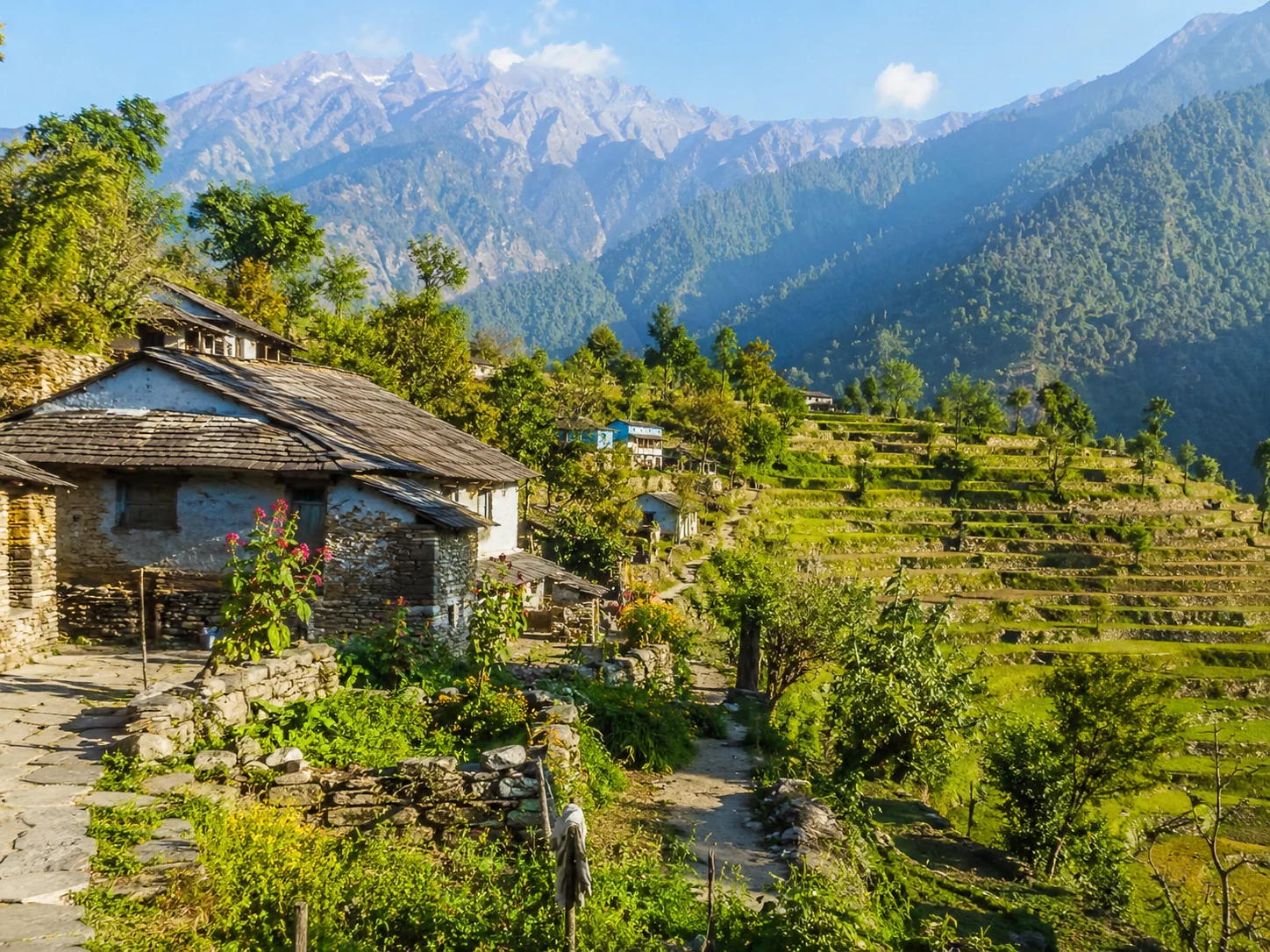
Before the Ganga becomes wide enough to hold the prayers of cities, she moves through Gangotri as the Bhagirathi—young, cold and restless.
The road follows her through Uttarkashi, Gangnani and the forests of Harsil. Apple orchards appear beside traditional mountain homes, waterfalls descend across dark cliffs, and the valley becomes narrower as the journey moves towards Gangotri.
Then the white temple appears beside the river.
Pilgrims gather around the ghat, bells echo against the mountains, and the Bhagirathi rushes past as though she has only just begun discovering the world.
Gangotri is accessible by road, but the journey still asks travellers to slow down. The altitude changes the air, the mountains alter the sense of distance, and the river quietly changes how familiar stories are understood.
This Gangotri travel guide covers the road route, the best time to visit, temple traditions, nearby places, the Gaumukh trek and a practical three-day itinerary.
Place Overview
Gangotri lies in Uttarakhand’s Uttarkashi district at approximately 3,100 metres above sea level. It is one of the four destinations in Uttarakhand’s Char Dham Yatra and is dedicated to Goddess Ganga.
The Bhagirathi River flows beside Gangotri Temple. It originates from the Gangotri Glacier and is known as the Ganga after meeting the Alaknanda at Devprayag.
Gangotri Temple is traditionally associated with the place where Goddess Ganga descended to Earth. According to the official Uttarakhand pilgrimage portal, the present temple was originally built by Gorkha commander Amar Singh Thapa and was later renovated by the Maharaja of Jaipur.
Unlike Yamunotri and Kedarnath, Gangotri Temple can be reached directly by motorable road. The actual glacial source at Gaumukh lies considerably farther into Gangotri National Park and requires a separate permitted trek.
Why This Place Is Special
Gangotri brings together two different understandings of a river.
For geography, the Bhagirathi emerges from the Gangotri Glacier before beginning its long journey towards Devprayag. For faith, this is the landscape where Goddess Ganga descended from the heavens after the penance of King Bhagirath.
According to Hindu tradition, the force of her descent was powerful enough to threaten the Earth. Lord Shiva received the river in his matted hair and released her in controlled streams, allowing the water to flow without destroying the land.
Near the temple, Bhagirath Shila marks the place where King Bhagirath is believed to have meditated.
Yet Gangotri’s meaning is not found only in mythology. It can be felt in the cold spray rising from the Bhagirathi, in deodar forests moving with the wind and in the sight of a river beginning a journey that will shape landscapes and lives across northern India.
Gangotri allows travellers to meet the Ganga before the plains, the cities and the crowds—when she still belongs almost entirely to the mountains.
How To Reach
By Train:
Dehradun, Haridwar and Rishikesh are the practical railway stations for Gangotri.
Haridwar generally offers wider railway connectivity, while Dehradun can be convenient for travellers approaching through Mussoorie.
The remaining journey must be completed by road.
By Air:
Jolly Grant Airport near Dehradun is the nearest airport.
Travellers arriving by air should stay overnight in Dehradun, Rishikesh or Uttarkashi rather than attempting to reach Gangotri immediately after landing.
Best Time To Visit
May to June
This is the main Gangotri pilgrimage season. The weather is comparatively comfortable, the temple is open and snow may still remain visible on surrounding mountains.
May and June also receive large crowds, particularly around weekends and religious dates.
July to mid-September
The monsoon covers the valley in deep green, but it also increases the possibility of landslides, falling stones, road closures and long traffic delays.
Travellers should check weather and district advisories before leaving Uttarkashi.
Late September to October
Autumn often brings clearer skies, colder nights and quieter surroundings. This is an excellent period for mountain views and a slower temple experience.
Carry proper winter layers because temperatures can fall sharply after sunset.
November to April
Gangotri Temple closes during winter because of heavy snowfall. The ceremonial deity of Goddess Ganga is taken to Mukhwa Village near Harsil, where winter worship continues.
The shrine traditionally opens around Akshaya Tritiya and closes near Diwali. Exact dates should be confirmed every year through the official pilgrimage portal.
Pahad Calling recommendation: Visit during late May or June for the complete yatra atmosphere, or choose late September to October for clearer views and fewer crowds.
Things To Do
- Visit Gangotri Temple
- Gangotri Temple is a graceful white shrine standing close to the Bhagirathi River.
- Spend time observing the setting rather than leaving immediately after darshan. The river, deodar trees and high mountain walls are part of the sacred landscape.
- Morning hours are usually more peaceful, while the evening aarti creates a deeply atmospheric experience beside the river.
- Offer prayers at Bhagirath Shila
- Bhagirath Shila is the sacred stone where King Bhagirath is believed to have performed penance to bring the Ganga to Earth.
- It lies near the temple and remains one of the most meaningful places in Gangotri’s spiritual tradition.
- Walk beside the Bhagirathi
- The riverside around Gangotri offers several quiet views of the Bhagirathi moving through the rocky valley.
- Use designated paths and ghats. The water is extremely cold and can flow with considerable force, so avoid entering deep sections or standing on wet rocks.
- See Surya Kund
- Surya Kund is a powerful waterfall and rocky formation near Gangotri Temple. The rushing water offers a striking view of the Bhagirathi’s force in the upper Himalayas.
- Observe it only from protected viewpoints and do not cross barriers for photographs.
- Visit Pandava Gufa
- Pandava Gufa is reached through a short forest walk from Gangotri. According to local tradition, the Pandavas rested or meditated here while travelling through the Himalayas.
- Confirm the trail condition locally before starting, particularly during rain or late in the season.
- Experience Harsil Valley
- Harsil lies along the road between Uttarkashi and Gangotri. Deodar forests, the Bhagirathi, traditional villages and apple orchards give the valley a quiet beauty entirely different from the busier temple towns.
- Rather than treating Harsil as a quick roadside stop, stay for a night if your itinerary allows.
- Visit Mukhwa Village
- Mukhwa is the winter home of Goddess Ganga. When Gangotri Temple closes, the ceremonial deity is carried here and worship continues throughout the winter.
- The village offers traditional architecture, views across the Bhagirathi valley and a more intimate understanding of the region’s living religious culture.
- Stop at Bhairon Ghati
- Bhairon Ghati lies near the meeting of the Jadh Ganga and Bhagirathi valleys. The landscape is dramatic, with deep gorges, dense forest and steep mountain walls.
- Stop only at designated places and follow local access restrictions.
- GANGOTRI AND GAUMUKH ARE NOT THE SAME PLACE
- Gangotri Temple can be reached directly by road. Gaumukh is the glacial source of the Bhagirathi and requires a separate high-altitude trek through Gangotri National Park.
- The Uttarkashi district administration lists Gaumukh at approximately 19 kilometres from Gangotri. Other official material may show slightly different trail distances because routes and checkpoints can change.
- Gaumukh trek requirements
- A forest permit is required.
- Daily entry may be restricted.
- Identification and registration documents must be carried.
- Accommodation and camping options are limited.
- Weather can change quickly.
- Trekkers should acclimatise before starting.
- Tapovan requires additional experience and specialist guidance.
Food / Local Culture
Food in Gangotri is simple and predominantly vegetarian. Restaurants and dharamshalas generally serve dal, rice, roti, vegetables, khichdi, paratha, tea and basic snacks.
Harsil and Dharali are known for apple orchards. During the harvest season, travellers may find fresh apples, juice, preserves and locally made products.
Traditional Garhwali food such as mandua roti, aloo ke gutke, rajma and jhangora preparations may be available at homestays or family-run kitchens.
Gangotri is a sacred and environmentally sensitive settlement. Dress respectfully, keep noise low and avoid photographing religious ceremonies or local residents without permission.
Travel Tips
Complete the required Char Dham Yatra registration before travelling.
Spend a night in Uttarkashi or Harsil before reaching Gangotri.
Start the Uttarkashi–Gangotri drive early.
Check the weather and road condition before departure.
Carry government identification and offline registration copies.
Pack warm layers even during summer.
Carry a rain jacket, gloves, woollen cap and comfortable shoes.
Keep some cash because network connectivity may be unreliable.
Refill fuel and purchase essential supplies in Uttarkashi.
Book accommodation early during May and June.
Walk slowly after reaching Gangotri because of the altitude.
Avoid strenuous activity immediately after arrival.
Obtain the required forest permit before attempting Gaumukh.
Carry every wrapper and plastic item back with you.
Keep one buffer day during the monsoon or late autumn.
Follow all instructions issued by police, forest officials and district authorities.
Things To Avoid
Do not confuse a temple visit with the Gaumukh trek.
Avoid attempting Uttarkashi to Gangotri after dark.
Do not proceed during an official road-closure or heavy-rain warning.
Never stop your vehicle beneath unstable slopes.
Avoid entering deep or fast-flowing sections of the Bhagirathi.
Do not stand on wet riverside rocks for photographs.
Avoid ignoring headache, nausea, dizziness or unusual breathlessness.
Never enter Gangotri National Park without the required permission.
Do not attempt Tapovan without adequate fitness, equipment and guidance.
Avoid loud music and disruptive photography around the temple.
Do not leave plastic, food waste or ritual materials beside the river.
Never approach glacier faces or unstable ice formations closely.
Elderly travellers and people with heart or breathing conditions should seek medical advice before visiting this altitude.
Suggested Itinerary
- Day 1 – Rishikesh or Dehradun to Uttarkashi
- Leave early and travel towards Uttarkashi through the lower Himalayan valleys.
- After arriving, visit the Kashi Vishwanath Temple if time permits. Complete any pending registration work, purchase essential supplies and rest.
- Day 2 – Uttarkashi to Gangotri via Harsil
- Start early and drive through Bhatwari and Gangnani towards Harsil.
- Stop at Harsil or Dharali for breakfast and a short walk before continuing through Bhairon Ghati to Gangotri.
- Visit Gangotri Temple, Bhagirath Shila and Surya Kund. Stay overnight in Gangotri if you are comfortable with the altitude, or return to Harsil for a quieter stay.
- Day 3 – Mukhwa and return journey
- Begin the morning slowly and revisit the temple if staying in Gangotri.
- Travel back through Harsil and visit Mukhwa Village. Continue towards Uttarkashi, Rishikesh or Dehradun.
- Travellers continuing the Char Dham circuit towards Kedarnath should plan a separate overnight halt rather than attempting an excessively long drive.
Final Thoughts
Every river carries more than water.
The Ganga carries prayers, memories, ashes, festivals, farms, cities and stories gathered across centuries. Yet at Gangotri, much of that journey still lies ahead.
Here, she is the Bhagirathi—cold enough to numb the hand, clear enough to reveal the stones beneath and powerful enough to fill the valley with sound.
Perhaps that is what makes Gangotri unforgettable. It allows us to meet something ancient while it still feels newly born.
Stand beside the river. Listen longer than you planned. Travel gently through the valley.
The Ganga has a long journey ahead—and so do we.
No approved comments yet. Be the first to share your thoughts.